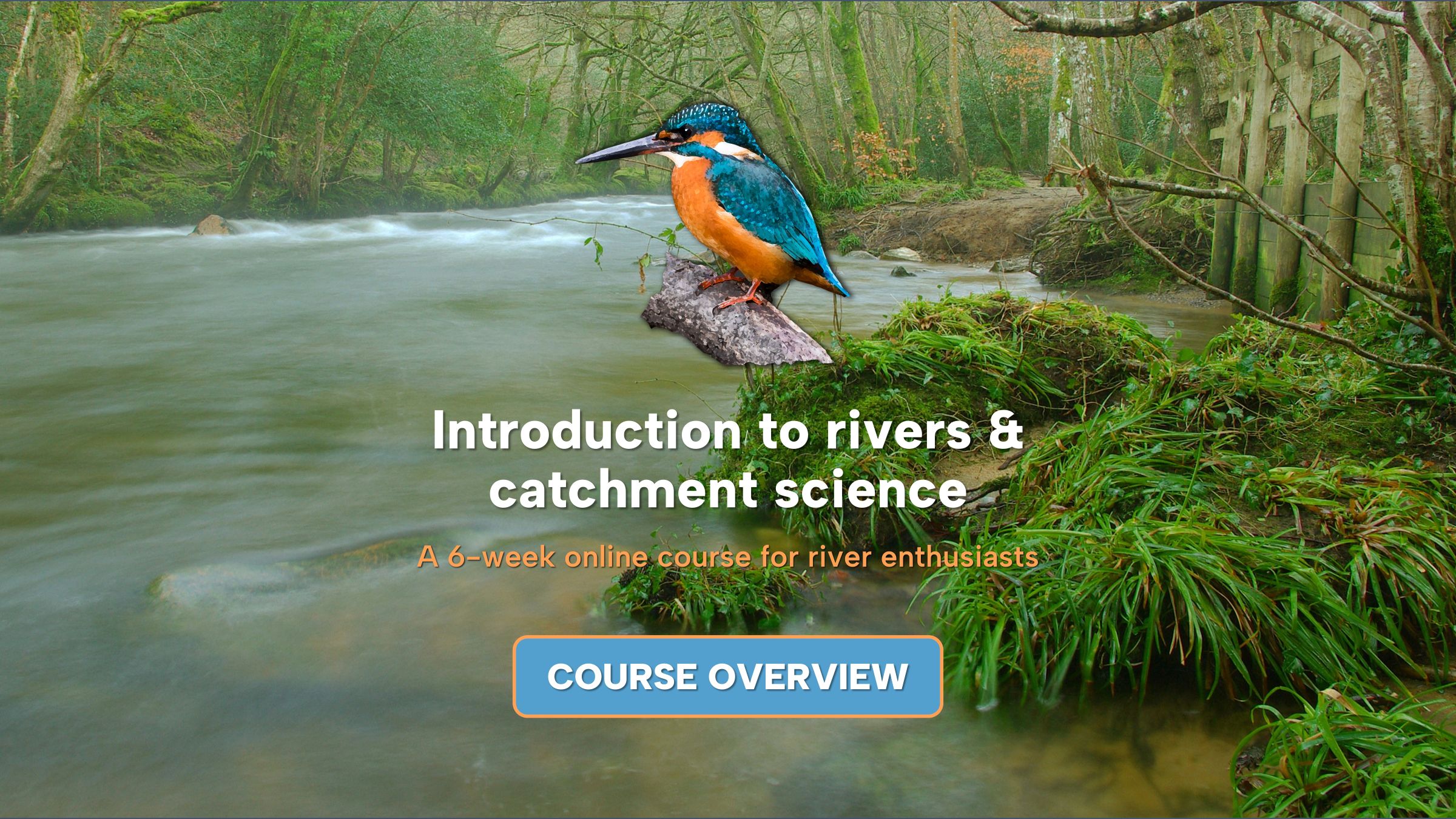
This six-module (self directed) online course offers a grounded introduction to river and catchment science, framed through systems thinking and a bioregional lens.
It is designed for river enthusiasts, citizen scientists, community groups and regenerative practitioners who see rivers as a powerful entry point into understanding how landscapes function and how they can be restored.
The course combines scientific foundations (hydrology, ecology, hydrogeomorphology, water chemistry) with more philosophical sessions, deep-dive presenations on key topics and real-world case studies.
By the end, participants will not only understand rivers more deeply, but they will also be better equipped to participate meaningfully in their protection and regeneration.
Learning outcomes:
By the end of the course participants will:
- Understand rivers as integrated social–ecological systems functioning at catchment scale.
- Recognise how land use, infrastructure, governance and climate change interact to influence river health and water system function.
- Be able to assess river condition using ecological, hydrological, geomorphological and chemical indicators.
- Apply source–pathway–receptor thinking to diagnose water quality problems and pollution sources in the landscape.
- Understand the roles of monitoring, modelling and surveys in targeting and desigining interventions.
- Identify practical restoration, nature-based and governance approaches that support resilient and regenerative river systems.
- Develop a clearer sense of their own role as river citizens and community stewards within a catchment or bioregion